How Often Should You Wash Your Hair to Keep It Healthy?
Few hair‑care questions cause as much confusion as how often should you wash your hair. One person swears by daily washing, another avoids shampoo for a week, and social media offers endless rules that rarely agree with each other. The truth is far less dramatic—and far more personal.
Healthy hair does not depend on a strict number of wash days. It depends on understanding your scalp, your hair type, and your lifestyle, then choosing a routine that supports all three. Dermatologists, trichologists, and cosmetic scientists generally agree on one thing: there is no universal schedule that works for everyone.
This guide breaks down what research and professional experience really say, so you can decide how often you should wash your hair to keep it clean, comfortable, and healthy.
Why Washing Frequency Matters for Hair Health
Your scalp is living skin. Just like the skin on your face, it produces oil, sheds cells, and reacts to your environment. That oil—called sebum—is not the enemy. According to dermatological research published by organizations such as the American Academy of Dermatology, sebum protects the scalp, keeps hair flexible, and prevents breakage.
When you wash too often, you strip away these natural oils faster than your scalp can replace them. Over time, this can lead to dryness, irritation, frizz, and fragile hair. On the other hand, washing too infrequently allows oil, sweat, dead skin, and product residue to build up, which may clog follicles and cause itching or flakes.
So when people ask how often should you wash your hair, the real question is how to balance cleanliness with protection.
What Actually Determines How Often You Should Wash Your Hair
Hair Type
Hair type plays a major role in washing frequency. Oily hair tends to look greasy faster, while dry hair can feel rough or brittle if washed too often. Normal hair usually falls somewhere in between and can tolerate more flexibility.
Scalp Condition
A healthy scalp feels calm and comfortable. Conditions like dandruff, sensitivity, or acne‑prone skin often require specific washing routines. Medical shampoos, for example, are usually meant to be used more frequently during treatment phases.
Hair Texture
Straight hair allows oil to travel down the hair shaft more easily, making it appear oily sooner. Curly and coily hair slows that oil movement, which is why textured hair often stays comfortable for longer between washes.
Lifestyle and Environment
Your daily habits matter more than most people realize. Exercise, heat styling, humidity, pollution, and even wearing hats all affect how quickly your scalp feels dirty.
Understanding these factors is the foundation for answering how often should you wash your hair in a realistic way.
How Often Should You Wash Your Hair by Hair Type
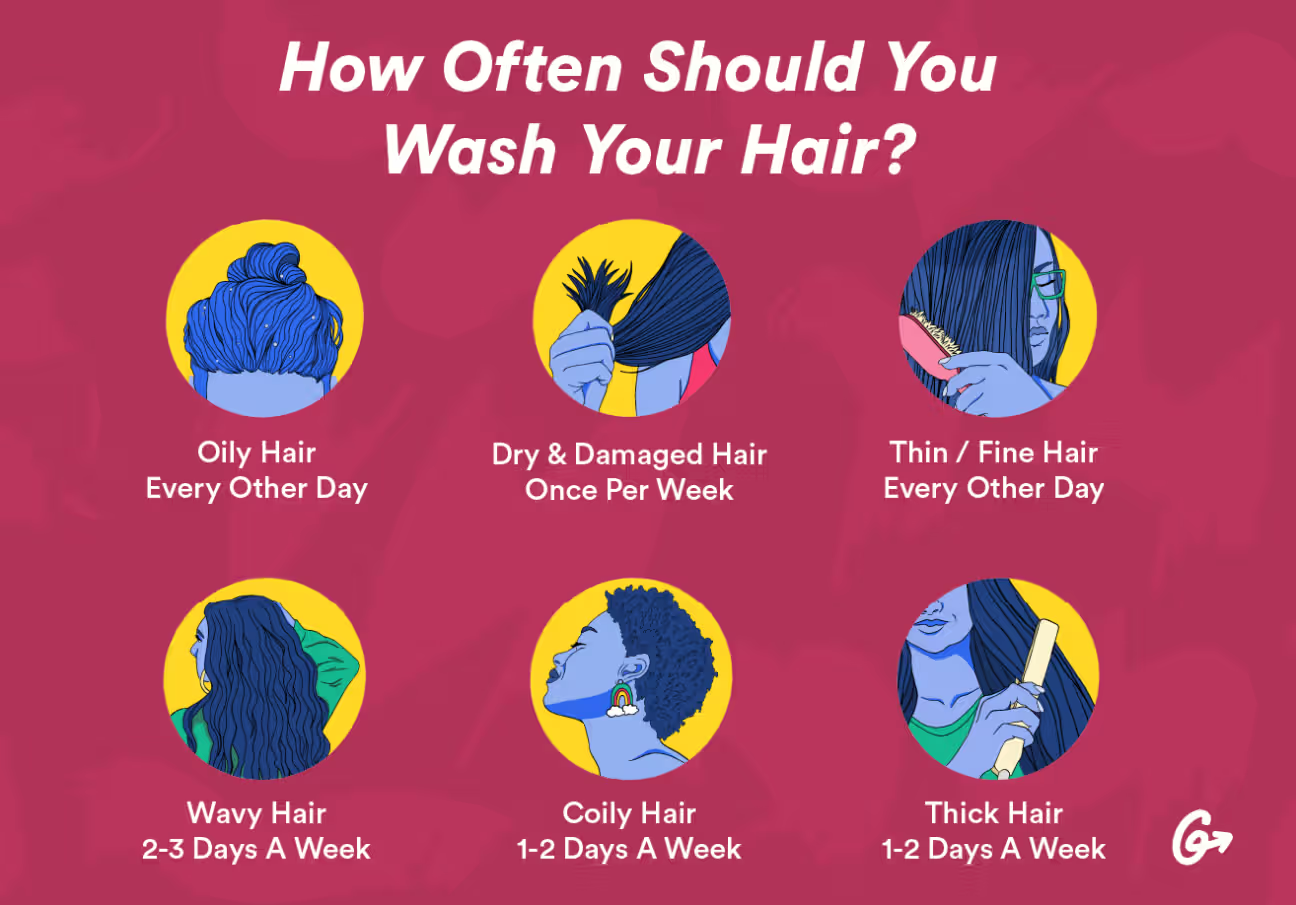
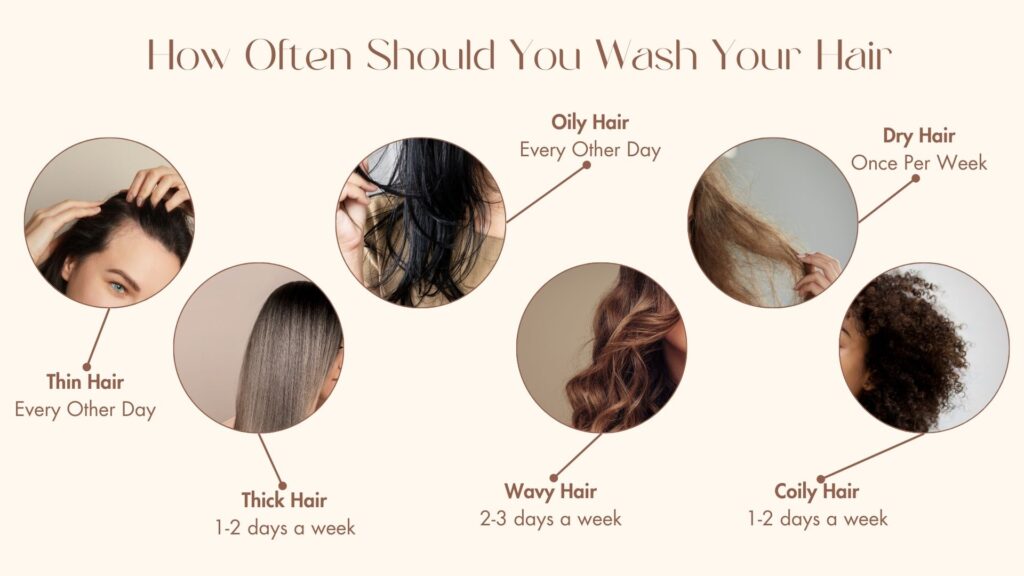
Oily Hair
If your scalp produces excess oil, washing more frequently may actually be healthier. Dermatologists often recommend washing oily hair every one to two days using a gentle, sulfate‑balanced shampoo. Skipping washes too long can cause oil buildup that makes hair feel heavier and look limp.
That said, harsh shampoos can trigger the scalp to produce even more oil as a defensive response. Choosing mild formulas and focusing shampoo on the scalp—not the ends—helps keep oil production balanced.
Dry or Damaged Hair
Dry hair benefits from fewer washes. Most experts suggest washing dry or chemically treated hair two to three times per week. This allows natural oils to coat the hair shaft, improving softness and elasticity.
Conditioner, hair masks, and leave‑in treatments play a bigger role here than shampoo frequency alone. Washing less often only works if moisture is replaced properly.
Curly, Coily, or Textured Hair
Curly and coily hair is naturally drier because oil does not travel easily from scalp to ends. Many trichologists recommend washing once a week or even once every ten days, depending on comfort.
Between washes, scalp cleansing methods like co‑washing or scalp tonics can help maintain freshness without stripping moisture.
Fine or Thin Hair
Fine hair shows oil more quickly and loses volume when weighed down by buildup. Washing every other day—or even daily with a lightweight shampoo—can help maintain lift while still protecting hair health.
How Often Should You Wash Your Hair Based on Lifestyle
If You Exercise Regularly
Sweat itself is mostly water and salt, but it mixes with oil and bacteria on the scalp. If you work out daily, you may need to wash more often, especially if sweat causes itching or odor. Some people alternate between full washes and gentle rinses to reduce dryness.
If You Use Styling Products
Hair sprays, gels, creams, and dry shampoos accumulate on the scalp over time. Product buildup can interfere with healthy hair growth, so regular cleansing becomes more important.
If You Live in a Hot or Polluted Environment
Heat and pollution increase oil production and attract dirt to the scalp. In these conditions, washing frequency often needs to increase slightly to keep the scalp comfortable.
Signs You Are Washing Your Hair Too Often
Your hair and scalp usually tell you when something is off. Common signs of overwashing include dryness, frizz, a tight or itchy scalp, and hair that feels worse immediately after washing. Some people also notice increased breakage or split ends.
Ironically, overwashing can cause oiliness to return faster, as the scalp overcompensates for lost moisture.
Signs You Are Not Washing Your Hair Enough
On the other side, underwashing can lead to greasy roots, dull appearance, scalp odor, flakes, and itchiness. According to dermatology studies, excessive buildup can also interfere with hair follicles, which may affect healthy growth over time.
If your scalp feels uncomfortable or your hair never seems to look clean, increasing wash frequency slightly may be the solution.
How to Wash Your Hair Properly
How you wash your hair matters just as much as how often. Many hair professionals emphasize technique over frequency.
Use a small amount of shampoo and apply it directly to the scalp, not the lengths. Massage gently with fingertips, not nails. Rinse thoroughly, as leftover shampoo residue can irritate the scalp.
Conditioner should be focused on the mid‑lengths and ends, where hair is older and drier. Applying conditioner directly to the scalp may contribute to buildup for some people.
Occasional deep cleansing, recommended by cosmetic chemists, can help remove residue without disrupting regular routines.
Can You Train Your Hair to Need Less Washing?
The idea of “training” hair is widely debated. Research shows that oil production is largely controlled by hormones and genetics, not habits. However, some people notice that when they stop using harsh shampoos and reduce overwashing, their scalp becomes more comfortable over time.
What actually changes is not oil production, but tolerance. Hair and scalp often feel better once irritation is reduced.
Expert Tips for Healthy Hair Between Washes
Dry shampoo can be useful, but it should not completely replace washing. Scalp brushing, silk pillowcases, and protective hairstyles all help extend freshness while minimizing damage.
Scalp care has become a growing focus in dermatology, and keeping the scalp calm and clean is now considered essential for healthy hair.
Common Hair‑Washing Myths
One persistent myth is that daily washing always damages hair. In reality, gentle daily washing can be perfectly healthy for some people. Another misconception is that greasy hair means poor hygiene. Oil production is biological, not a sign of cleanliness.
Understanding these myths helps answer how often should you wash your hair without guilt or rigid rules.
Final Thoughts on Finding the Right Washing Routine
There is no perfect number that applies to everyone. The healthiest routine is one that keeps your scalp comfortable, your hair manageable, and your lifestyle realistic.
Pay attention to how your hair responds, adjust as needed, and remember that healthy hair is not about strict rules—it is about balance.
When it comes to how often should you wash your hair, the best answer is the one your scalp agrees with.Few hair‑care questions cause as much confusion as how often should you wash your hair. One person swears by daily washing, another avoids shampoo for a week, and social media offers endless rules that rarely agree with each other. The truth is far less dramatic—and far more personal.
Healthy hair does not depend on a strict number of wash days. It depends on understanding your scalp, your hair type, and your lifestyle, then choosing a routine that supports all three. Dermatologists, trichologists, and cosmetic scientists generally agree on one thing: there is no universal schedule that works for everyone.
This guide breaks down what research and professional experience really say, so you can decide how often you should wash your hair to keep it clean, comfortable, and healthy.
Why Washing Frequency Matters for Hair Health
Your scalp is living skin. Just like the skin on your face, it produces oil, sheds cells, and reacts to your environment. That oil—called sebum—is not the enemy. According to dermatological research published by organizations such as the American Academy of Dermatology, sebum protects the scalp, keeps hair flexible, and prevents breakage.
When you wash too often, you strip away these natural oils faster than your scalp can replace them. Over time, this can lead to dryness, irritation, frizz, and fragile hair. On the other hand, washing too infrequently allows oil, sweat, dead skin, and product residue to build up, which may clog follicles and cause itching or flakes.
So when people ask how often should you wash your hair, the real question is how to balance cleanliness with protection.
What Actually Determines How Often You Should Wash Your Hair
Hair Type
Hair type plays a major role in washing frequency. Oily hair tends to look greasy faster, while dry hair can feel rough or brittle if washed too often. Normal hair usually falls somewhere in between and can tolerate more flexibility.
Scalp Condition
A healthy scalp feels calm and comfortable. Conditions like dandruff, sensitivity, or acne‑prone skin often require specific washing routines. Medical shampoos, for example, are usually meant to be used more frequently during treatment phases.
Hair Texture
Straight hair allows oil to travel down the hair shaft more easily, making it appear oily sooner. Curly and coily hair slows that oil movement, which is why textured hair often stays comfortable for longer between washes.
Lifestyle and Environment
Your daily habits matter more than most people realize. Exercise, heat styling, humidity, pollution, and even wearing hats all affect how quickly your scalp feels dirty.
Understanding these factors is the foundation for answering how often should you wash your hair in a realistic way.
How Often Should You Wash Your Hair by Hair Type
Oily Hair
If your scalp produces excess oil, washing more frequently may actually be healthier. Dermatologists often recommend washing oily hair every one to two days using a gentle, sulfate‑balanced shampoo. Skipping washes too long can cause oil buildup that makes hair feel heavier and look limp.
That said, harsh shampoos can trigger the scalp to produce even more oil as a defensive response. Choosing mild formulas and focusing shampoo on the scalp—not the ends—helps keep oil production balanced.
Dry or Damaged Hair
Dry hair benefits from fewer washes. Most experts suggest washing dry or chemically treated hair two to three times per week. This allows natural oils to coat the hair shaft, improving softness and elasticity.
Conditioner, hair masks, and leave‑in treatments play a bigger role here than shampoo frequency alone. Washing less often only works if moisture is replaced properly.
Curly, Coily, or Textured Hair
Curly and coily hair is naturally drier because oil does not travel easily from scalp to ends. Many trichologists recommend washing once a week or even once every ten days, depending on comfort.
Between washes, scalp cleansing methods like co‑washing or scalp tonics can help maintain freshness without stripping moisture.
Fine or Thin Hair
Fine hair shows oil more quickly and loses volume when weighed down by buildup. Washing every other day—or even daily with a lightweight shampoo—can help maintain lift while still protecting hair health.
How Often Should You Wash Your Hair Based on Lifestyle
If You Exercise Regularly
Sweat itself is mostly water and salt, but it mixes with oil and bacteria on the scalp. If you work out daily, you may need to wash more often, especially if sweat causes itching or odor. Some people alternate between full washes and gentle rinses to reduce dryness.
If You Use Styling Products
Hair sprays, gels, creams, and dry shampoos accumulate on the scalp over time. Product buildup can interfere with healthy hair growth, so regular cleansing becomes more important.
If You Live in a Hot or Polluted Environment
Heat and pollution increase oil production and attract dirt to the scalp. In these conditions, washing frequency often needs to increase slightly to keep the scalp comfortable.
Signs You Are Washing Your Hair Too Often
Your hair and scalp usually tell you when something is off. Common signs of overwashing include dryness, frizz, a tight or itchy scalp, and hair that feels worse immediately after washing. Some people also notice increased breakage or split ends.
Ironically, overwashing can cause oiliness to return faster, as the scalp overcompensates for lost moisture.
Signs You Are Not Washing Your Hair Enough
On the other side, underwashing can lead to greasy roots, dull appearance, scalp odor, flakes, and itchiness. According to dermatology studies, excessive buildup can also interfere with hair follicles, which may affect healthy growth over time.
If your scalp feels uncomfortable or your hair never seems to look clean, increasing wash frequency slightly may be the solution.
How to Wash Your Hair Properly
How you wash your hair matters just as much as how often. Many hair professionals emphasize technique over frequency.
Use a small amount of shampoo and apply it directly to the scalp, not the lengths. Massage gently with fingertips, not nails. Rinse thoroughly, as leftover shampoo residue can irritate the scalp.
Conditioner should be focused on the mid‑lengths and ends, where hair is older and drier. Applying conditioner directly to the scalp may contribute to buildup for some people.
Occasional deep cleansing, recommended by cosmetic chemists, can help remove residue without disrupting regular routines.
Can You Train Your Hair to Need Less Washing?
The idea of “training” hair is widely debated. Research shows that oil production is largely controlled by hormones and genetics, not habits. However, some people notice that when they stop using harsh shampoos and reduce overwashing, their scalp becomes more comfortable over time.
What actually changes is not oil production, but tolerance. Hair and scalp often feel better once irritation is reduced.
Expert Tips for Healthy Hair Between Washes
Dry shampoo can be useful, but it should not completely replace washing. Scalp brushing, silk pillowcases, and protective hairstyles all help extend freshness while minimizing damage.
Scalp care has become a growing focus in dermatology, and keeping the scalp calm and clean is now considered essential for healthy hair.
Common Hair‑Washing Myths
One persistent myth is that daily washing always damages hair. In reality, gentle daily washing can be perfectly healthy for some people. Another misconception is that greasy hair means poor hygiene. Oil production is biological, not a sign of cleanliness.
Understanding these myths helps answer how often should you wash your hair without guilt or rigid rules.
Final Thoughts on Finding the Right Washing Routine
There is no perfect number that applies to everyone. The healthiest routine is one that keeps your scalp comfortable, your hair manageable, and your lifestyle realistic.
Pay attention to how your hair responds, adjust as needed, and remember that healthy hair is not about strict rules—it is about balance.
Frequently Asked Questions
How often should you wash your hair if it gets oily quickly?
If your hair becomes oily within a day or two, washing every one to two days is usually healthy. Using a gentle shampoo and avoiding heavy conditioners on the scalp can help control oil without overdrying.
Is it bad to wash your hair every day?
Daily washing is not harmful for everyone. If you use a mild shampoo and your scalp feels comfortable, washing every day can be perfectly fine, especially for oily scalps or active lifestyles.
How often should you wash your hair if it is dry or damaged?
Dry or damaged hair generally benefits from washing two to three times a week. Washing less often helps preserve natural oils and reduces stress on already fragile strands.
Can washing your hair too often cause hair loss?
Frequent washing does not cause true hair loss, but overwashing can lead to breakage and scalp irritation. Hair may appear thinner if it becomes dry and weak, even though follicles remain healthy.
How often should you wash your hair if you work out regularly?
If you sweat heavily, you may need to wash more often, even daily. For lighter workouts, rinsing or alternating full washes can keep the scalp fresh without stripping moisture.