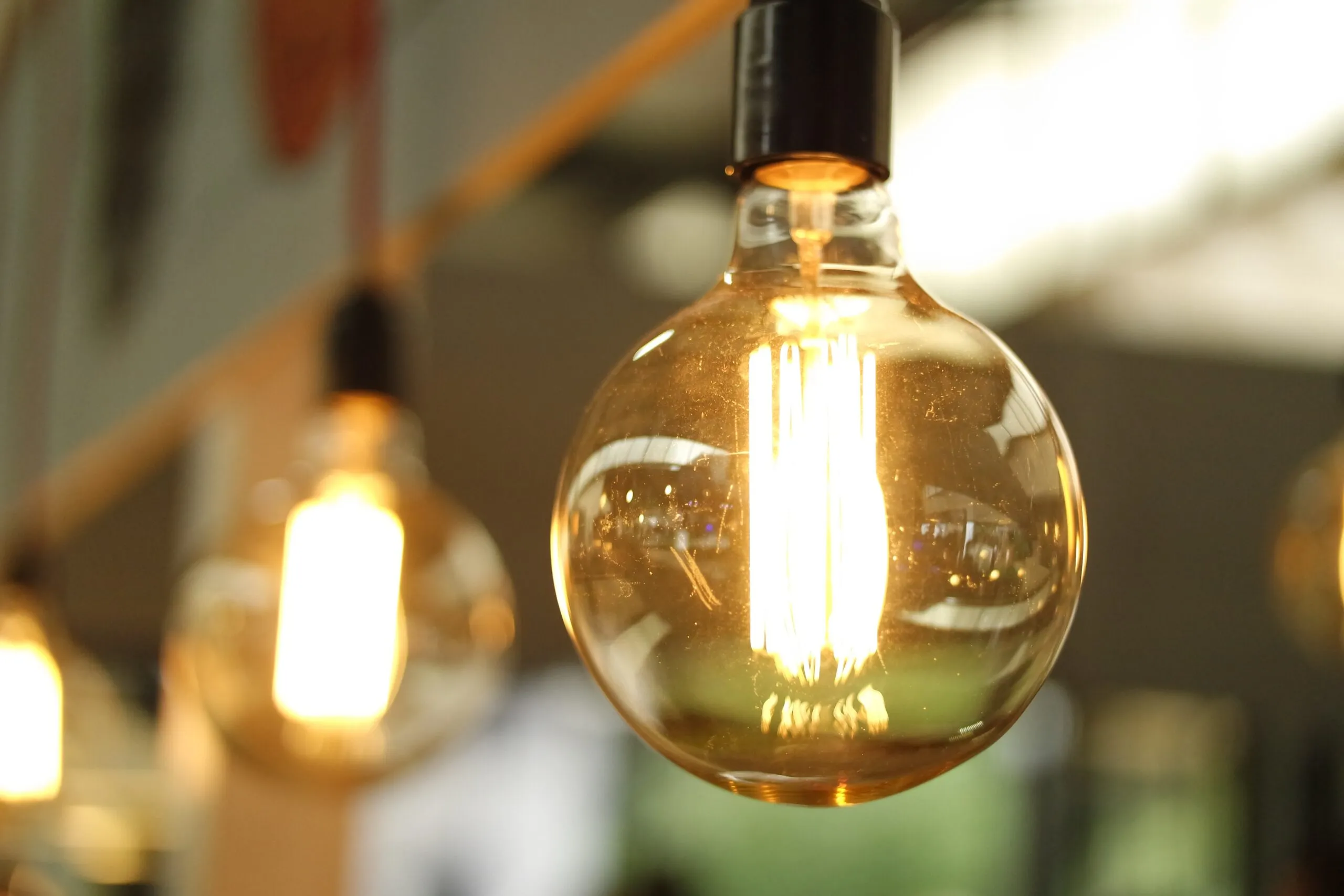
The incandescent light bulb is one of the most familiar objects in the world. For generations, it represented comfort, warmth, and even inspiration — the classic symbol of a “bright idea.”
Even though many modern homes now rely on LEDs, this old technology still shapes how we think about light. Understanding it helps us make smarter, more energy-aware choices today.
Below, we’ll walk through how it works, where it still fits, and what to use instead without losing that warm, inviting glow.
What Is An Incandescent Light Bulb
An incandescent light bulb produces light by heating a thin metal filament until it glows. That glowing filament is the heart of the bulb.
The invention is often linked to Thomas Edison, but many inventors contributed to the technology before his version became commercially practical. Edison simply engineered a long-lasting filament and a reliable system around it.
Today, you’ll still see incandescent bulbs in:
- decorative fixtures
- vintage lamps
- ovens and appliances
- specialty lighting where heat or color accuracy matters
Even with regulations limiting their sale, they haven’t completely disappeared.
How An Incandescent Bulb Works
Inside the bulb, the parts are simple — and that’s part of the beauty.
A tungsten filament stretches between two metal supports. The bulb is filled with an inert gas, usually argon or nitrogen, and sealed tight. When electricity flows through the filament, resistance causes the filament to heat up — often above 2,500°C (4,500°F). At that temperature, it begins to glow.
That glowing effect is called incandescence.
It’s the same principle behind glowing coals in a fire. The only difference is control: in a bulb, the glass keeps oxygen out so the filament doesn’t burn away instantly.
But there’s a trade-off. Most of the energy becomes heat, not light. That’s why incandescent bulbs are warm to the touch, and why they are far less efficient than modern alternatives.
Wattage, Brightness, And Color
For years, people chose bulbs by wattage. Higher wattage meant “brighter.” But that’s not technically true.
Wattage measures energy use, not brightness.
Brightness is measured in lumens. An old 60-watt incandescent bulb gives around 800 lumens. Today, an LED can produce the same brightness with only about 10 watts.
This is one of the reasons regulations shifted the market: too much electricity is wasted as heat.
Color temperature is another key factor. It is measured in kelvin (K):
- 2700K — warm, cozy, yellow light
- 3000K — soft white, pleasant and balanced
- 5000K — daylight, cooler and crisp
The famous warmth of the incandescent light bulb typically sits near 2700K. That’s why people describe it as natural and relaxing — especially in bedrooms, living rooms, and dining areas.
Lifespan And Energy Use
Most incandescent bulbs last around 750–1,200 hours. Compare that with LEDs, which can last 15,000–25,000 hours or more.
That difference adds up.
A single LED may last years. Incandescent bulbs burn out regularly — especially when turned on and off frequently. They also waste up to 90% of their energy producing heat.
Bright truth: The cheapest bulb to buy often becomes the most expensive to keep.
Why People Still Love Incandescent Bulbs
Even with their flaws, incandescent bulbs have qualities many people miss.
They turn on instantly.
No flicker. No warm-up.
They dim smoothly.
Most dimmers are built around incandescent technology, so the control feels natural.
They show colors beautifully.
Incandescents have a Color Rendering Index (CRI) of nearly 100, meaning objects look true to life under their light.
And of course, the glow itself feels soft and familiar. For many, it feels like “home.”
The Downsides You Can’t Ignore
The disadvantages are real — and the reason governments have moved away from them.
High energy consumption.
They draw far more power than LEDs for the same brightness.
Short lifespan.
They burn out quickly, especially in high-use fixtures.
Heat output.
They get hot enough to cause burns or create fire risk in certain fixtures.
Environmental impact.
More electricity use means more strain on power plants and higher emissions overall.
As energy standards increased, incandescent bulbs simply couldn’t keep up.
Are Incandescent Bulbs Banned
The answer depends on where you live.
In many regions, including the United States and the European Union, regulations now restrict the sale of general-purpose incandescent bulbs that do not meet efficiency standards. However, that doesn’t mean they vanished completely.
Specialty bulbs still exist, such as:
- appliance bulbs
- oven bulbs
- rough-service bulbs
- decorative and vintage-style filament bulbs
- some halogen variants
The goal wasn’t to erase the incandescent light bulb — it was to steer everyday lighting toward safer, more efficient technology.
Agencies such as the U.S. Department of Energy and the European Commission have documented these transitions in public energy reports and consumer guides.
Modern Alternatives Worth Using
Today, most homes have moved toward LED lighting — and for good reason.
LEDs
LEDs don’t rely on heat to create light. They’re incredibly efficient, cool to the touch, and last years longer. Many now mimic the warmth of an incandescent light bulb so convincingly that most people can’t tell the difference.
There are dimmable versions, filament-style “Edison” bulbs, and high-CRI models designed to keep colors natural.
CFLs
Compact fluorescent bulbs were once the main alternative, but they’ve mostly faded as LEDs improved. They use less energy than incandescents but contain small amounts of mercury, which requires careful disposal.
Halogen
Halogen bulbs are technically a more advanced type of incandescent. They’re slightly more efficient and burn brighter, but they’re still hot and less energy-friendly than LEDs. They are best used only where specifically required.
Choosing The Right Bulb Today
When replacing a bulb, think beyond wattage. A few simple steps make choosing easier.
Pick the brightness.
Look for lumens, not watts.
Choose the color temperature.
Want cozy? Choose 2700K. Need bright clarity? Try 3000K–4000K.
Check compatibility.
If you have dimmers or enclosed fixtures, make sure the bulb is rated for them.
Compare energy use and lifespan.
LEDs will almost always save more money long-term.
Look for quality.
Reputable brands usually provide better warranty support and consistent color.
Those small decisions shape the feel, mood, and cost of your lighting for years.
Safety Tips You Should Know
Because incandescent bulbs run hot, awareness matters.
- Never touch a hot bulb.
- Keep fabric and flammable material away.
- Use the correct wattage recommended for the fixture.
- Let bulbs cool before replacing.
- Dispose of broken bulbs carefully.
With LEDs, many of these risks disappear — another reason they’re becoming standard.
FAQs About Incandescent Bulbs
Why do incandescent bulbs burn out so fast
The filament weakens each time it heats and cools. Eventually, it breaks — especially with frequent on-off cycles.
Is incandescent light better for your eyes
Not necessarily. Comfort depends more on brightness, glare, and the lighting environment than on the bulb type.
Are Edison-style bulbs still allowed
Yes — many decorative versions exist, often as LED filament bulbs that simply look vintage.
Can LEDs replace incandescents everywhere
Almost everywhere. Some specialty fixtures may need specific bulbs, but most household lighting transitions easily.
Final Thoughts: Where Incandescent Bulbs Belong Now
The incandescent light bulb changed the world. It lit homes, powered industries, and created an emotional connection to warmth and comfort that still lasts.
But we also live in a time where efficiency matters. Energy bills, environmental impact, and long-term sustainability cannot be ignored. LEDs now offer the same inviting glow — without the heat, cost, and constant replacements.
The real goal isn’t nostalgia vs. new technology.
The goal is light that feels right, works safely, and makes sense for our future.
you may also read:https://everybusiness.co.uk/ingredients-in-vullkozvelex-safe-to-use/